Wednesday, July 9, 2008


Tuesday, July 8, 2008
Monday, July 7, 2008
The Chinese Language: Evidence of the Genesis Account
"Old Chinese, sometimes known as "Archaic Chinese", was the language common during the early and middle Zhōu Dynasty (1122 BC - 256 BC), texts of which include inscriptions on bronze artifacts, the poetry of the Shījīng, the history of the Shūjīng, and portions of the Yìjīng (I Ching)."
http://en.wikipedia.org/wiki/Chinese_language#History_and_evolution
"The oldest discovered texts are oracular sayings incised on tortoise shells and cattle scapulae by court diviners of the Shang dynasty beginning in the early 14th century bc; these are the so-called oracle-bone inscriptions. Although the writing system has since been standardized and stylistically altered, its principles and many of its symbols remain fundamentally the same.
Like other scripts of ancient origin, Chinese is derived from picture writing. It grew into a word-by-word representation of language when it was discovered that words too abstract to be readily pictured could be indicated by their sound rather than their sense. Unlike other scripts, however, Chinese still works pictographically as well as phonetically. Moreover, its sound indications have not been adapted to changes of pronunciation but have remained keyed to the pronunciation of 3,000 years ago. The building blocks of the system are several hundred pictographs for such basic words as man, horse, and axe. In addition, expanded, or compound, pictographs exist. For example, a symbol of this type representing a man carrying grain means “harvest,” and thus “year” (nian)."
http://encarta.msn.com/encyclopedia_761565543_2/chinese_language.html
EARLY CHINESE EVIDENCE OF THE GENESIS ACOUNT
BOAT
The Chinese word for boat is made up of three components.

The left most character means "ship" or "vessel."

The upper righthand character is the Chinese number "eight."

The bottom righthand character is the word for "mouth" or "person." The first boat mentioned in the Bible is Noah's ark. Just how many people or "mouths" were aboard this ship or vessel? Genesis 7:13 tells us: "In the selfsame day entered Noah, and Shem, and Ham, and Japheth, the sons of Noah, and Noah's wife, and the three wives of his sons with them, into the ark." So Noah's ark was a ship or a vessel with eight people. The Chinese language records this fact in perfect detail.

SEPARATE
After the flood, the eight humans on the Ark settle down, have children, and eventually diffuse themselves throughout the land to form different nations.

TEMPTER
Genesis 3:1-5
First, we have a character with the meaning of "secret" or "private."

Then we have another variation on the character for "man" or "son."

In this character, you see an enclosed garden divided into four parts.

When we combine these characters, we see the meaning of the character for "devil." The devil was crafty, tricky, and secretive in his private approach to Eve in the garden -- he caught Eve when she was alone; when Adam was not with her, and could not counsel or advise her against the devil's tempting. He spoke to Eve with the voice of a man so that she could understand. This whole event takes place in the garden of Eden. Afterward, Eve also tempted the man, Adam, and he fell to the temptation as well.

To form the "tempter" character, we first top the "devil" character with two trees. Although there were many trees in the garden of Eden, only two receive specific mention: (1) the "tree of life" and (2) the "tree of the knowledge of good and evil" (Genesis 2:9). Satan's specific temptation to Eve was to get her to eat from the tree of the knowledge of good and evil.

We then add the character for "cover" to indicate that this temptation took place under the "cover" of the trees of the garden. Again, Satan does not do his work out in the open light. The Deceiver comes to us in subtilty and craftiness.

So, 'secret' + 'man' + 'garden' + 'devil' + 'trees' + 'cover' = "tempter"

COVET

The word "covet" or "desire" pictures a woman making a decision between two trees. Genesis 2:8-9 shows us that there were two significant trees side by side in the garden from which to choose. The woman made a wrong choice as we are told in Genesis 3:6. She chose the tree which God had commanded her not to eat of. She coveted the knowlege which the devil told her could be hers.

FORBIDDEN

Here again we see the two trees at the top of the character for "forbidden." The bottom portion of this character is an abbreviated form of a word for God plus an added little "hook" (bottom center) which changes the meaning from "God" to "God commands or notifies." So the word "forbidden" means "God makes a commandment about two trees." God in fact made specific commandments forbidding Adam and Eve to eat from either of the two trees (at different times). He first forbid them to eat of the "tree of the knowledge of good and evil" (Genesis 2:16-17). After they fell to temptation, He forbids them to eat of the "tree of life" (Genesis 3:22-24).
http://bibleprobe.com/chinese.htm
Here are some others:

Eve secretly eats from the Tree of Knowledge with her mouth. This first sin marks the beginning of humankind's sinful fall and descent from holy relationship with God.

After eating from the Tree of Knowledge, Adam and Even become aware of their nakedness and hide in the trees. "Body is tree" characterizes this intent of camouflaging into the background.


All three of these characters mean "naked", and share the character for fruit as a component. If you were to design a language, why would you use the word for fruit to make the word "naked"? Genesis provides a contextual explanation for this choice. Adam and Eve hide their private areas with the leaves of a fruit tree; specifically, a fig tree.

God created human beings who could not only walk, but talk.

The first man was created from dust; the dust made alive.

Lamb + (above) me = Righteousness
In the Old Testament people sacrifice lambs for their sins. In the New Testament, Jesus died for our sins on the cross to offer us salvation. The only way to salvation is to accept Jesus who paid for our sins.
Also see this
FLASH PRESENTATION
http://en.wikipedia.org/wiki/Chinese_language#History_and_evolution
"The oldest discovered texts are oracular sayings incised on tortoise shells and cattle scapulae by court diviners of the Shang dynasty beginning in the early 14th century bc; these are the so-called oracle-bone inscriptions. Although the writing system has since been standardized and stylistically altered, its principles and many of its symbols remain fundamentally the same.
Like other scripts of ancient origin, Chinese is derived from picture writing. It grew into a word-by-word representation of language when it was discovered that words too abstract to be readily pictured could be indicated by their sound rather than their sense. Unlike other scripts, however, Chinese still works pictographically as well as phonetically. Moreover, its sound indications have not been adapted to changes of pronunciation but have remained keyed to the pronunciation of 3,000 years ago. The building blocks of the system are several hundred pictographs for such basic words as man, horse, and axe. In addition, expanded, or compound, pictographs exist. For example, a symbol of this type representing a man carrying grain means “harvest,” and thus “year” (nian)."
http://encarta.msn.com/encyclopedia_761565543_2/chinese_language.html
EARLY CHINESE EVIDENCE OF THE GENESIS ACOUNT
BOAT
The Chinese word for boat is made up of three components.

The left most character means "ship" or "vessel."

The upper righthand character is the Chinese number "eight."

The bottom righthand character is the word for "mouth" or "person." The first boat mentioned in the Bible is Noah's ark. Just how many people or "mouths" were aboard this ship or vessel? Genesis 7:13 tells us: "In the selfsame day entered Noah, and Shem, and Ham, and Japheth, the sons of Noah, and Noah's wife, and the three wives of his sons with them, into the ark." So Noah's ark was a ship or a vessel with eight people. The Chinese language records this fact in perfect detail.

SEPARATE
After the flood, the eight humans on the Ark settle down, have children, and eventually diffuse themselves throughout the land to form different nations.

TEMPTER
Genesis 3:1-5
First, we have a character with the meaning of "secret" or "private."

Then we have another variation on the character for "man" or "son."

In this character, you see an enclosed garden divided into four parts.

When we combine these characters, we see the meaning of the character for "devil." The devil was crafty, tricky, and secretive in his private approach to Eve in the garden -- he caught Eve when she was alone; when Adam was not with her, and could not counsel or advise her against the devil's tempting. He spoke to Eve with the voice of a man so that she could understand. This whole event takes place in the garden of Eden. Afterward, Eve also tempted the man, Adam, and he fell to the temptation as well.

To form the "tempter" character, we first top the "devil" character with two trees. Although there were many trees in the garden of Eden, only two receive specific mention: (1) the "tree of life" and (2) the "tree of the knowledge of good and evil" (Genesis 2:9). Satan's specific temptation to Eve was to get her to eat from the tree of the knowledge of good and evil.

We then add the character for "cover" to indicate that this temptation took place under the "cover" of the trees of the garden. Again, Satan does not do his work out in the open light. The Deceiver comes to us in subtilty and craftiness.

So, 'secret' + 'man' + 'garden' + 'devil' + 'trees' + 'cover' = "tempter"

COVET

The word "covet" or "desire" pictures a woman making a decision between two trees. Genesis 2:8-9 shows us that there were two significant trees side by side in the garden from which to choose. The woman made a wrong choice as we are told in Genesis 3:6. She chose the tree which God had commanded her not to eat of. She coveted the knowlege which the devil told her could be hers.

FORBIDDEN

Here again we see the two trees at the top of the character for "forbidden." The bottom portion of this character is an abbreviated form of a word for God plus an added little "hook" (bottom center) which changes the meaning from "God" to "God commands or notifies." So the word "forbidden" means "God makes a commandment about two trees." God in fact made specific commandments forbidding Adam and Eve to eat from either of the two trees (at different times). He first forbid them to eat of the "tree of the knowledge of good and evil" (Genesis 2:16-17). After they fell to temptation, He forbids them to eat of the "tree of life" (Genesis 3:22-24).
http://bibleprobe.com/chinese.htm
Here are some others:

Eve secretly eats from the Tree of Knowledge with her mouth. This first sin marks the beginning of humankind's sinful fall and descent from holy relationship with God.

After eating from the Tree of Knowledge, Adam and Even become aware of their nakedness and hide in the trees. "Body is tree" characterizes this intent of camouflaging into the background.


All three of these characters mean "naked", and share the character for fruit as a component. If you were to design a language, why would you use the word for fruit to make the word "naked"? Genesis provides a contextual explanation for this choice. Adam and Eve hide their private areas with the leaves of a fruit tree; specifically, a fig tree.

God created human beings who could not only walk, but talk.

The first man was created from dust; the dust made alive.

Lamb + (above) me = Righteousness
In the Old Testament people sacrifice lambs for their sins. In the New Testament, Jesus died for our sins on the cross to offer us salvation. The only way to salvation is to accept Jesus who paid for our sins.
Also see this
FLASH PRESENTATION
Sunday, July 6, 2008
Laminin: apparent evidence of God within our very cells
After doing research on Snopes and other sites, I found that laminin, though it has the 4 'arms' does not always take the shape of a perfect cross, because it bends and twists. Yet, it still has the cross basic shape. And it is still a foundational protein that holds things together.

Snopes and other sites also said that laminin looks like other objects to some people, and not just a cross.
To some people, laminin looks like a sword. OK, that's fine, because the Word of God is related in the Bible to a sword: the sword of the Spirit (Ephesians 6:17). The Bible says that God's Word is sharper than any two-edged sword, piercing even to the division of soul and spirit (Hebrews 4:12).
One Atheist I saw on the Internet posted a sarcastic reply to that video, and said this:
"Y’know, I looked at that laminin protein for a while and I think you’ve got the wrong god. The protein looks a whole lot more like the caduceus wielded by Hermes, God of Travelers, in the way that the serpent-like chains wrap around the staff. While laminin is important for cell structure, DNA is the code that makes us what we are, and its structure is another double-helix, like the caduceus. It really makes you marvel at how the Hermes, the God of Boundaries, extends to the very boundaries of our cells!"
from: http://radicalruss.com/2008/05/laminin-gods-cross-shaped-glue/
Caduceus

So, to some people, laminin looks like a caduceus, which is a staff with two entwining serpents going up the staff, and wings at the top. Though the caduceus has ties with paganism (used as the symbol of the wand of Hermes, and also as an ancient astrological symbol of commerce), it has also has come to be used as a symbol for medicine. It is similar to the rod of Asclepius, which is a single snake wrapped around a staff, and which also symbolizes the healing arts. The caduceus is often also used as a symbol for medicine or doctors, in place of the rod of Asclepius, which is the usual symbol of medical professions.
Rod of Asclepius

A 1992 survey of American health organisations found that 62% of professional associations used the rod of Asclepius, whereas in commercial organizations, 76% used the caduceus.
According to Greek mythology, Asclepius was said to have learned the art of healing from Chiron. He is customarily represented as a surgeon on the ship Argo. According to some, Asclepius fought alongside the Achaeans in the Trojan War, and cured Philoctetes of his famous snake bite. Asclepius was so skilled in the medical arts that he was reputed to have brought patients back from the dead. For this, he was punished and placed in the heavens as the constellation Ophiuchus (meaning "serpent-bearer"). This constellation lies between Sagittarius and Libra.
In early Christianity, the constellation Ophiuchus was associated with Saint Paul holding the Maltese Viper.
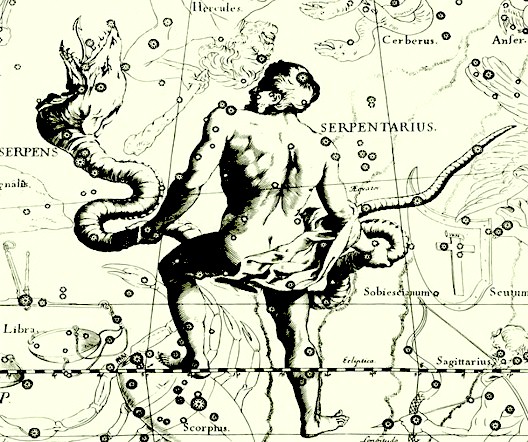
Novidius changed the figure to that of Saint Paul with the Maltese Viper; Caesius gave it as Aaron, whose staff became a serpent, or as Moses, who lifted up the Brazen Serpent in the Wilderness.
The EMS Star of Life, seen on ambulances, features a rod of Asclepius (a blue, six-pointed star, outlined with a white border which features the Rod of Asclepius in the center).

A similar orange star is used for search and rescue personnel and yet another version is used for Wilderness emergency medical technician.

I believe that both the caduceus (2 snakes around a pole with wings at the top) and the rod of Asclepius (1 snake around a pole), both which represent medicine, have their origins from the Bible, when Moses made a staff with a bronze serpent on it, to heal the Israelites.
A similar symbol, Nehushtan, is mentioned in the Bible in Numbers 21:4–9. Attacked by a plague of snakes in the wilderness, Moses holds up a serpent coiled around a staff, both made from bronze, so that the Israelites might recover from the bites. In the Gospel of John, Jesus compared himself to Nehushtan. Jesus taught: "As Moses lifted up the serpent in the wilderness, even so must the Son of Man be lifted up, that whoever believes in Him should not perish but have eternal life".
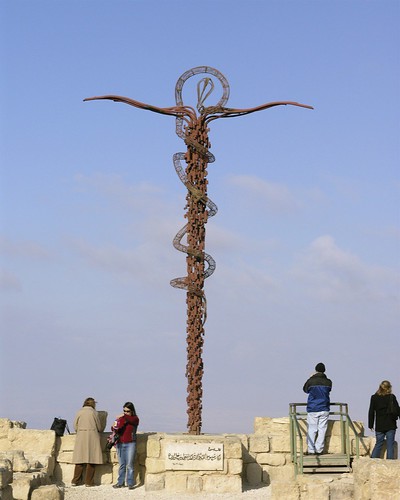

Another interpretation is the wooden rod encoiled by a snake to be representative of the Tree of Knowledge. In the Garden of Eden, the serpent/Satan tempted Eve to eat of the apple, which she also gave to Adam, and thereby brought the 'disease of sin' upon the entire human race, which can only be healed by faith and trust in Christ Jesus, the Messiah.
But the point is, whether you think laminin looks like a cross, a sword, a caduceus, or the rod of Asclepius, ALL of those have biblical symbolism and ties, and so the representation of Christianity and God remain! I can only assume that, since God is the One Who created laminin, He made it look that way intentionally, and the fact is, that no matter which of those items you think it looks like, it still does not detract from the fact that there is Christian and biblical symbolism involved, which apparently seems to be intentional evidence that God placed there!
That same Atheist who posted the sarcastic remark mentioned earlier, also said this:
"Then I spent a little more time and discovered the protein called porin. Porins are the proteins that allow for diffusion of molecules across cell membranes. They are the very mechanism by which our cells receive nourishment! Now wouldn’t you know it, but the porin looks just like the triquetta of Celtic paganism. Yet another expression in creation of how the power of three San Francisco witches feed all of us."
OK, so I looked up 'triquetta.' The triquetra (often, triqueta) is a tripartate symbol composed of three interlocked vesica pisces, marking the intersection of three circles. It is most commonly a symbol of the Holy Trinity (Father, son, Holy spirit) used by the Celtic Christian Church, sometimes stylized as three interlaced fish!

Triplicities were common symbols in Celtic myth and legend, one of the possible reasons Christian beliefs were so easily adopted by the Celtic people.
The triqueta makes an ideal Christian symbol. It is a perfect representation of the concept of "three in one" in Christian trinity beliefs, and incorporates another popular Christian symbol, the fish, in its original form of the vesica pisces. It is sometimes enclosed within a circle to emphasize the unity aspect. The triquetra of interlaced fishes is one of the very earliest of Christian symbols, predating the crucifix by hundreds of years.

So, rather than detracting from the idea that God has placed these evidences within our very cells, this Atheist has unwittingly added to it!
Oh, and by the way, that same Atheist that wrote those sarcastic remarks, writes this later on the same page:
"Do you pray for my soul? Are you saddened to know that I will burn in Hell, or do you think God has a special miraculous plan for me? And what of the billions on Earth who do not believe in the salvation through Christ? Do their damned souls make you weep at night?"
Saturday, July 5, 2008
Energy Saver Light Bulbs
A friend emailed me the link to the above video, which was ironic because, weeks previous to watching this video, I created an illustration that talked about the exact same thing and which showed the exact same steps described in the video. Below is my illustration.
I created the following in Adobe Illustrator. The bottom two images are scans of the final revision of my artwork published in the local newspaper. Click on each image to see a larger image.


Friday, July 4, 2008
Election in Romans 9
"As long as we believe that God exercises ANY control over history or the lives of His people, then we must come to terms with Election one way or another. It is inescapable.
When Jesus called His first disciples, He called twelve and not more. Others might very well have profited from having spent the following three years in close association with Jesus, but Jesus only chose twelve for this privilege. Moreover, when He sent His disciples into the world to tell others about Him, by necessity these early preachers went in one direction rather than another. Philip went to Samaria; Barnabas went to Antioch. Later, Paul and Barnabas went north to Asia Minor. Still later, Paul and other companions went to Greece, then Italy, and eventually further west. In each case, a choice was involved---north rather than south; west rather than east. If God was directing the movement of these servants of His at all, He was choosing that some should hear the gospel rather than others. This is a form of election.
The same is true in our experience: if you believe that God is leading you to speak to someone about the gospel, it is an inescapable fact that you are speaking to that person rather than another. Even if a Christian friend should join you and speak to that other person when you cannot, there are still millions of others who are inevitably passed by. Election is an inescapable fact of human history.
Paul shows that Abraham, Isaac and Jacob, the three fathers of the nation of Israel, became what they were by election and that others were not granted this privilege. Election is obvious in the case of Abraham, which is one reason why Paul does not discuss his case in detail. Abraham had a pagan ancestry, having been born in the ancient city of Ur in Mesopotamia. He had no knowledge of the true God, because no one in Ur had knowledge of the true God. Abraham did not know God, nor did he seek God. No one seeks Him (Romans 3:11). Rather, God sought Abraham. Since the call of Abraham is recorded in Genesis 12, every Jew would have to confess that Jewish history began with that election. This is what led to the Jews becoming God's "Chosen People."
But the real issue, then, would be whether all the descendants of Abraham (i.e., all Jews), were thereby saved, or whether the principle of choice and rejection also applies after the initial choice of Abraham. In other words, does God continue to choose some, but not all---i.e, some Jews and some Gentiles, but not all? Paul begins to address this issue in Romans 9:7-9: "Nor because they are his descendants are they all Abraham's children. On the contrary, "It is through Isaac that your offspring will be reckoned. In other words, it is not the natural children who are God's children, but it is the children of the promise who are regarded as Abraham's offspring. For this was how the promise was stated: "At the appointed time I will return, and Sarah will have a son."
The point is that Abraham had another son. He had begotten Ishmael of Hagar thirteen years before Isaac was born, yet Ishmael was not chosen. He was Abraham's descendant, but he was not a child of promise as Isaac was (contrary to what Muslims believe).
Notice the contrast in the phrases "natural children" and "children of the promise" in verse 8: "In other words, it is not the natural children who are God's children, but it is the children of the promise who are regarded as Abraham's offspring." The contrast shows that the difference between Isaac and Ishmael was not merely that God elected Isaac and passed over the other son, but also that the choice of God involved a supernatural intervention in the case of Isaac's conception. Ishmael was born of Abraham's natural powers, but Isaac was born when Abraham was past the age of getting a woman pregnant, and when Sarah was past the age of conceiving and giving birth.
In the same way, our spiritual conception and birth, which result from God's electing choice, are supernatural. We cannot birth spiritual life in ourselves since, according to Ephesians 2:1, we are spiritually dead. In order for us to become spiritually alive, God must do a miracle.
"Not only that, but Rebekah's children had one and the same father, our father Isaac. Yet, before the twins were born or had done anything good or bad—in order that God's purpose in election might stand: not by works but by Him who calls—she was told, "The older will serve the younger." (Romans 9:10-12)
The choice of Jacob rather than Esau went against the normal standard of culture, where the elder should have received the greater blessing. True, the boys were twins, but Esau actually emerged from Rebekah's womb first, though Jacob was chosen. There is nothing to explain this except God's sovereign right to dispose of the destinies of human beings as He pleases, entirely apart from any rights thought to belong to use due to our age or other factors.
Notice that the choice of Jacob instead of Esau was made before either child had opportunity to do either good or evil. It was made while the children were still in the womb. This means---and this is important---that election is not on the basis of anything done by the chosen individual.
Moreover, the choice was made to teach the doctrine of election, for that is what Romans 9, verses 11 and 12 say: "Yet, before the twins were born or had done anything good or bad---in order that God's purpose in election might stand: not by works but by Him who calls..."
This means that God made His choice before the birth of Rebekah's sons to show that His choices are unrelated to anything a human being might or might not do. It is a case, as Paul will say just a few verses further on, that "God has mercy on whom He wants to have mercy" (verse 18).
How could it be otherwise, if the condition of fallen humanity is as bad as the Bible declares it to be? Romans 3 says, "there is no one righteous, not even one; there is no one who understands, no one who seeks God (verses 10-11). This means that sin pervades all our actions and darkens all our natural understanding, with the result that, rather than fleeing TO God, Who is our only reasonable object of worship, and our only hope of blessing, we flee FROM Him.
How could a creature as depraved as that, possibly come to God unless God should first set His saving choice upon him and then call him to faith? How could a sinner like that believe the gospel unless God should first enable her to him to believe? But of course, that is exactly what God does.
In Romans 9, Paul is teaching Election. The chapter heading in my NIV Bible says, "God's Sovereign Choice." So, even the NIV Bible is saying that Paul is teaching Election in Romans 9.
First, let's talk about Romans 9:14-18. Paul had argued that while his own Jewish countrymen were unsaved, they had themselves to blame for being against God's provision of the Messiah. Nevertheless, this fact had not changed the status of the nation before God, for to them belonged the adoption, the glory, the covenants, and the promises of God (Romans 9:1-4). But that is precisely where the whole problem became intense. Had Paul been willing to have said that because of Israel's disobedience, she had forfeited her favored position, and therefore all the promises had been transferred to the Church, no long discussion would have been needed on this topic.
Paul refused to cut the knot in this manner. He was too careful a student of the Old Testament to come to that conclusion. On the contrary, he is certain that "God's gifts and his call are irrevocable" (Romans 11:29). God would not rescind His ancient promise just because various individuals, generations, or leaders of the nation had failed to participate in the blessing of the promises of God through unbelief. God's sovereign election of the nation would remain in force despite the persistent disobedience of that nation.
Since Paul's Jewish objectors were reduced to the fact of sovereign election, there were only two choices left: either charge God with unrighteousness for showing partiality or plead that persons are not responsible for their evil deeds. Paul answers the first choice in verses 14-18 and the second in verses 19-29.
To the first objection, Paul strongly declares that it is impossible that any injustice or unrighteousness should be attributed to God. The whole idea is abhorrent (Romans 9:14). To prove that point, Paul quotes God's word to Moses, "I will have mercy on whom I will have mercy and I will have compassion on whom I have compassion: (Romans 9:15; from Exodus 33:19). At first, these words seem to support the contention of the objector, but the circumstances under which they were uttered show that first impression to be incorrect. While Moses had been on the mount, Israel had gone headlong into the worship of the golden calf. All were guilty, even the High Priest. Had strict justice been served, all would have perished on the spot. But God showed mercy to those who did not deserve it.
The point is clear. If the mercy of God that is sovereignly given is now going to be declared as unfairness in God, then the objector is going to have to say that God was unfair in sparing the nation in the incident of the golden calf! But if God was righteous in choosing to have mercy on a portion of Israel then, even though three thousand died in one day, He certainly could be viewed as being righteous in showing mercy to a portion of Israel in the days of Paul and the Church.
The two cases were not dissimilar. In any case, it was not that people were saved, then or now, because they willed to be saved. On the contrary, in Moses' day they had set their wills against God (Exodus 32:9-10), but God still had mercy (Romans 9:16). The election of God does not fall on those who "run" and "will," or else there would be no elect, for "no one...seeks God" (Romans 3:11).
What has been said of the mercy of God must also be said of the judgment of God. To prove this point, Paul will use Pharaoh as his example. Over and over again during the first five plagues, the Scriptures note that "Pharaoh hardened his heart" (ten times in Exodus 7:13,14,22; 8:15,19,32; 9:7,34,35; 13:15). Finally, during the last five plagues, after enduring with much patience the hardness of this man's heart, God "hardened Pharaoh's heart" (Exodus 9:12; 10:1,2,27; 11:10; 14:4,8,17).
[And, by the way, many unbelievers have used this to claim that the Bible contradicts itself. They say that the Bible says that Pharaoh hardened his heart, but then turns around and says that God hardened Pharaoh's heart, which is a contradiction...or so they claim.]
The so-called "theological problem" against which many moderns have thundered is no more difficult to understand than the ordinary psychological phenomenon so common to everyday life. Fail to respond to the ringing of the alarm clock several mornings in a row and this hardening will soon make you impervious to any subsequent ringing of the alarm in days to come!
In verse 19, the apostle takes up the second objection that could be brought against divine sovereignty. The unbelieving Jew might still debate the issue by contending that if the sovereignty of God is absolute, why, then, does God still find fault with me and hold me individually responsible? Can anyone, continues the plea, withstand God? If He does not approve of my conduct and actions, then way did He make me this way? On those grounds, I am no longer responsible.
Paul will not debate the subtle moral lie that is contained in this complaint against God. Instead, he will give the objector the rebuke he deserves: "But who are you, O man, to talk back to God?" (Romans 9:20). Disrespect is disrespect. That calls for the more immediate attention than any other consideration at this point.
Almost every well-informed Jew would know where this figure of the "potter" came from---the prophet Isaiah:
"All of us have become like one who is unclean, and all our righteous acts are like filthy rags; we all shrivel up like a leaf, and like the wind our sins sweep us away. No one calls on Your Name or strives to lay hold of You; for You have hidden Your face from us and made us waste away because of our sins. Yet, O Lord, you are our Father. We are the clay, you are the potter; we are all the work of your hand." (Isaiah 64:6-8)
God is not pictured by Paul as a Creator creating man, but as a "potter" working with "clay." The "clay" here depicts persons as sinners. God does not make persons sinners; He takes the "clay" as He finds it. He found it in the state of sinful "clay," even as Isaiah had taught in the passage that Paul undoubtedly had reference to in this text.
The mercy of the potter is now shown by the fact that God endured with much patience individuals that were responsible for their own problems. The apostle is careful to make sure that God is not charged with any responsibility for the sin of individuals.
The critical verse is verse 22. "What if God, choosing to show His wrath and make His power known, bore with great patience the objects of His wrath---prepared for destruction?" Since the Greek word "prepared" may be either passive or middle voice, the deciding factor must be doctrinal. According to the Bible, people fit themselves for destruction. God is not responsible.
Over against these who fitted themselves for destruction, Romans 9:23 declares that God Himself prepared "the objects of His mercy" long ago in advance for His glory! What a contrast! Accordingly, the whole responsibility for the present state of affairs with regard to objects prepared for wrath rests where it should---on the shoulders of unbelievers! If credit is given for anyone who is saved, it belongs to God. Therefore, if some are saved, to God belongs the glory! If others are lost, they alone are responsible.
But here is the most mind-stretching question of all: Why doesn't God show mercy to everyone? This question might be raised by a person who understands the difference between justice and mercy but who still wonders why God is selective. This is a proper question to ask because it is asking for understanding rather than demanding that God conform to our standards of right and wrong. It is faith in search of enlightenment.
Verse 15 (of Romans 9) seems to say merely that this is the way God operates: "I will have mercy on whom I have mercy, and I will have compassion on whom I have compassion." This is a perfectly legitimate answer to our question, namely, that the "why" of it is God's business, not ours. God does not owe us an answer. What is more, there are undoubtedly parts of the answer that are not revealed. God has reasons that may forever be unknown.
Still there is one answer in this chapter. It is that God's ultimate objective in electing some to salvation and passing by others is not to do good. Neither is it to do good to those persons primarily. Rather His ultimate objective is to make His glory known. In other words, God's ultimate concern in everything He does is not so much for us as for Himself. In saving some He makes known His mercy and compassion. In passing by others He makes known His power and wrath.
Paul's quotation of Exodus 9:16 in verse 17 makes this point: "For the Scripture says to Pharaoh: 'I raised you up for this very purpose, that I might display my power in you and that my name might be proclaimed in all the earth.'" This identifies at least one purpose of God in passing by some, namely, to display His power. Then a few verses further on Paul explains that God's "wrath," "power," "patience," "glory," and "mercy" are displayed in election, on the one hand, and in passing by some people, on the other. "What if God, choosing to show His wrath and make His power known, bore with great patience the objects of His wrath---prepared for destruction? what if He did this to make the riches of His glory known to the objects of His mercy, whom He prepared in advance for glory---even us, whom He also called, not only from the Jews but also from the Gentiles?" (verses 22-24).
What this means is that God considers the display of His attributes to be worth the whole historical drama---worth Creation, worth the Fall, worth redemption, worth election, worth passing over, and everything else. From God's point of view the revelation of His glory is the great and unshakable priority.
This explanation will not satisfy all people. It may not satisfy you, and if it does not, you are probably asking at this point, "But why should it be necessary for God to be glorified?" There is only one possible answer, and it is this: Because it is right that God be glorified. God is glorious, glorious in all His many attributes. He should be glorified; and because this is a universe planned by God, created by God, and run by God, and not by us, that which is right will in the end be done. God will be honored, and all will bow before Him.
But do you see how this is going? We began with the theodicy question: Is God right to act as he does? We were asking it because it did not seem right to us for God to select some for salvation and to pass by and judge others for their sin. But when we examine the question, as we have, we find that the matter is exactly the opposite of what we first imagined it to be. We have found that God acts as He does precisely because He is just. He glorifies His name in displaying wrath towards sinners and the riches of His glory toward those who are being saved because this is the only right thing for God to do. It is His very justice, not His injustice, that cause His to operate in the fashion.
The real wonder, of course, is that God displays His mercy, for by its very nature mercy is undeserved and unrequired. Yet God has done so. He has done so in saving sinners like ourselves.
The last verse of the chapter show that not all who are of Israel are the true Israel, and second, they demonstrate the truth of election and passing over by four Old Testament citations. It is the way Paul customarily writes---first the argument and then the proof of it from the Old Testament. Here he shows that God's purposes toward the Jews have not failed (verse 6) because God had previously revealed that not all Jews would be saved and that Gentiles would be. Two of these citations are from the minor prophet Hosea (Hosea 2:23 and 1:10), and two are from the major prophet Isaiah (Isaiah 10:22-23 and 1:9). The verses from Hosea show that God has always intended to include Gentiles in His plan of salvation. The verses from Isaiah show that His electing call has never included every single Jew.
Whenever we think of election we tend to focus on the negative, wondering why some are passed over. But the Bible focuses on the positive, calling this the day of God's grace. The demonstration of God's justice in judging sinners is an important part of what God is doing in human history, but it is not the whole thing. God is also making known the riches of His glory in saving some."
(from BSF Notes, 1998)
When Jesus called His first disciples, He called twelve and not more. Others might very well have profited from having spent the following three years in close association with Jesus, but Jesus only chose twelve for this privilege. Moreover, when He sent His disciples into the world to tell others about Him, by necessity these early preachers went in one direction rather than another. Philip went to Samaria; Barnabas went to Antioch. Later, Paul and Barnabas went north to Asia Minor. Still later, Paul and other companions went to Greece, then Italy, and eventually further west. In each case, a choice was involved---north rather than south; west rather than east. If God was directing the movement of these servants of His at all, He was choosing that some should hear the gospel rather than others. This is a form of election.
The same is true in our experience: if you believe that God is leading you to speak to someone about the gospel, it is an inescapable fact that you are speaking to that person rather than another. Even if a Christian friend should join you and speak to that other person when you cannot, there are still millions of others who are inevitably passed by. Election is an inescapable fact of human history.
Paul shows that Abraham, Isaac and Jacob, the three fathers of the nation of Israel, became what they were by election and that others were not granted this privilege. Election is obvious in the case of Abraham, which is one reason why Paul does not discuss his case in detail. Abraham had a pagan ancestry, having been born in the ancient city of Ur in Mesopotamia. He had no knowledge of the true God, because no one in Ur had knowledge of the true God. Abraham did not know God, nor did he seek God. No one seeks Him (Romans 3:11). Rather, God sought Abraham. Since the call of Abraham is recorded in Genesis 12, every Jew would have to confess that Jewish history began with that election. This is what led to the Jews becoming God's "Chosen People."
But the real issue, then, would be whether all the descendants of Abraham (i.e., all Jews), were thereby saved, or whether the principle of choice and rejection also applies after the initial choice of Abraham. In other words, does God continue to choose some, but not all---i.e, some Jews and some Gentiles, but not all? Paul begins to address this issue in Romans 9:7-9: "Nor because they are his descendants are they all Abraham's children. On the contrary, "It is through Isaac that your offspring will be reckoned. In other words, it is not the natural children who are God's children, but it is the children of the promise who are regarded as Abraham's offspring. For this was how the promise was stated: "At the appointed time I will return, and Sarah will have a son."
The point is that Abraham had another son. He had begotten Ishmael of Hagar thirteen years before Isaac was born, yet Ishmael was not chosen. He was Abraham's descendant, but he was not a child of promise as Isaac was (contrary to what Muslims believe).
Notice the contrast in the phrases "natural children" and "children of the promise" in verse 8: "In other words, it is not the natural children who are God's children, but it is the children of the promise who are regarded as Abraham's offspring." The contrast shows that the difference between Isaac and Ishmael was not merely that God elected Isaac and passed over the other son, but also that the choice of God involved a supernatural intervention in the case of Isaac's conception. Ishmael was born of Abraham's natural powers, but Isaac was born when Abraham was past the age of getting a woman pregnant, and when Sarah was past the age of conceiving and giving birth.
In the same way, our spiritual conception and birth, which result from God's electing choice, are supernatural. We cannot birth spiritual life in ourselves since, according to Ephesians 2:1, we are spiritually dead. In order for us to become spiritually alive, God must do a miracle.
"Not only that, but Rebekah's children had one and the same father, our father Isaac. Yet, before the twins were born or had done anything good or bad—in order that God's purpose in election might stand: not by works but by Him who calls—she was told, "The older will serve the younger." (Romans 9:10-12)
The choice of Jacob rather than Esau went against the normal standard of culture, where the elder should have received the greater blessing. True, the boys were twins, but Esau actually emerged from Rebekah's womb first, though Jacob was chosen. There is nothing to explain this except God's sovereign right to dispose of the destinies of human beings as He pleases, entirely apart from any rights thought to belong to use due to our age or other factors.
Notice that the choice of Jacob instead of Esau was made before either child had opportunity to do either good or evil. It was made while the children were still in the womb. This means---and this is important---that election is not on the basis of anything done by the chosen individual.
Moreover, the choice was made to teach the doctrine of election, for that is what Romans 9, verses 11 and 12 say: "Yet, before the twins were born or had done anything good or bad---in order that God's purpose in election might stand: not by works but by Him who calls..."
This means that God made His choice before the birth of Rebekah's sons to show that His choices are unrelated to anything a human being might or might not do. It is a case, as Paul will say just a few verses further on, that "God has mercy on whom He wants to have mercy" (verse 18).
How could it be otherwise, if the condition of fallen humanity is as bad as the Bible declares it to be? Romans 3 says, "there is no one righteous, not even one; there is no one who understands, no one who seeks God (verses 10-11). This means that sin pervades all our actions and darkens all our natural understanding, with the result that, rather than fleeing TO God, Who is our only reasonable object of worship, and our only hope of blessing, we flee FROM Him.
How could a creature as depraved as that, possibly come to God unless God should first set His saving choice upon him and then call him to faith? How could a sinner like that believe the gospel unless God should first enable her to him to believe? But of course, that is exactly what God does.
In Romans 9, Paul is teaching Election. The chapter heading in my NIV Bible says, "God's Sovereign Choice." So, even the NIV Bible is saying that Paul is teaching Election in Romans 9.
First, let's talk about Romans 9:14-18. Paul had argued that while his own Jewish countrymen were unsaved, they had themselves to blame for being against God's provision of the Messiah. Nevertheless, this fact had not changed the status of the nation before God, for to them belonged the adoption, the glory, the covenants, and the promises of God (Romans 9:1-4). But that is precisely where the whole problem became intense. Had Paul been willing to have said that because of Israel's disobedience, she had forfeited her favored position, and therefore all the promises had been transferred to the Church, no long discussion would have been needed on this topic.
Paul refused to cut the knot in this manner. He was too careful a student of the Old Testament to come to that conclusion. On the contrary, he is certain that "God's gifts and his call are irrevocable" (Romans 11:29). God would not rescind His ancient promise just because various individuals, generations, or leaders of the nation had failed to participate in the blessing of the promises of God through unbelief. God's sovereign election of the nation would remain in force despite the persistent disobedience of that nation.
Since Paul's Jewish objectors were reduced to the fact of sovereign election, there were only two choices left: either charge God with unrighteousness for showing partiality or plead that persons are not responsible for their evil deeds. Paul answers the first choice in verses 14-18 and the second in verses 19-29.
To the first objection, Paul strongly declares that it is impossible that any injustice or unrighteousness should be attributed to God. The whole idea is abhorrent (Romans 9:14). To prove that point, Paul quotes God's word to Moses, "I will have mercy on whom I will have mercy and I will have compassion on whom I have compassion: (Romans 9:15; from Exodus 33:19). At first, these words seem to support the contention of the objector, but the circumstances under which they were uttered show that first impression to be incorrect. While Moses had been on the mount, Israel had gone headlong into the worship of the golden calf. All were guilty, even the High Priest. Had strict justice been served, all would have perished on the spot. But God showed mercy to those who did not deserve it.
The point is clear. If the mercy of God that is sovereignly given is now going to be declared as unfairness in God, then the objector is going to have to say that God was unfair in sparing the nation in the incident of the golden calf! But if God was righteous in choosing to have mercy on a portion of Israel then, even though three thousand died in one day, He certainly could be viewed as being righteous in showing mercy to a portion of Israel in the days of Paul and the Church.
The two cases were not dissimilar. In any case, it was not that people were saved, then or now, because they willed to be saved. On the contrary, in Moses' day they had set their wills against God (Exodus 32:9-10), but God still had mercy (Romans 9:16). The election of God does not fall on those who "run" and "will," or else there would be no elect, for "no one...seeks God" (Romans 3:11).
What has been said of the mercy of God must also be said of the judgment of God. To prove this point, Paul will use Pharaoh as his example. Over and over again during the first five plagues, the Scriptures note that "Pharaoh hardened his heart" (ten times in Exodus 7:13,14,22; 8:15,19,32; 9:7,34,35; 13:15). Finally, during the last five plagues, after enduring with much patience the hardness of this man's heart, God "hardened Pharaoh's heart" (Exodus 9:12; 10:1,2,27; 11:10; 14:4,8,17).
[And, by the way, many unbelievers have used this to claim that the Bible contradicts itself. They say that the Bible says that Pharaoh hardened his heart, but then turns around and says that God hardened Pharaoh's heart, which is a contradiction...or so they claim.]
The so-called "theological problem" against which many moderns have thundered is no more difficult to understand than the ordinary psychological phenomenon so common to everyday life. Fail to respond to the ringing of the alarm clock several mornings in a row and this hardening will soon make you impervious to any subsequent ringing of the alarm in days to come!
In verse 19, the apostle takes up the second objection that could be brought against divine sovereignty. The unbelieving Jew might still debate the issue by contending that if the sovereignty of God is absolute, why, then, does God still find fault with me and hold me individually responsible? Can anyone, continues the plea, withstand God? If He does not approve of my conduct and actions, then way did He make me this way? On those grounds, I am no longer responsible.
Paul will not debate the subtle moral lie that is contained in this complaint against God. Instead, he will give the objector the rebuke he deserves: "But who are you, O man, to talk back to God?" (Romans 9:20). Disrespect is disrespect. That calls for the more immediate attention than any other consideration at this point.
Almost every well-informed Jew would know where this figure of the "potter" came from---the prophet Isaiah:
"All of us have become like one who is unclean, and all our righteous acts are like filthy rags; we all shrivel up like a leaf, and like the wind our sins sweep us away. No one calls on Your Name or strives to lay hold of You; for You have hidden Your face from us and made us waste away because of our sins. Yet, O Lord, you are our Father. We are the clay, you are the potter; we are all the work of your hand." (Isaiah 64:6-8)
God is not pictured by Paul as a Creator creating man, but as a "potter" working with "clay." The "clay" here depicts persons as sinners. God does not make persons sinners; He takes the "clay" as He finds it. He found it in the state of sinful "clay," even as Isaiah had taught in the passage that Paul undoubtedly had reference to in this text.
The mercy of the potter is now shown by the fact that God endured with much patience individuals that were responsible for their own problems. The apostle is careful to make sure that God is not charged with any responsibility for the sin of individuals.
The critical verse is verse 22. "What if God, choosing to show His wrath and make His power known, bore with great patience the objects of His wrath---prepared for destruction?" Since the Greek word "prepared" may be either passive or middle voice, the deciding factor must be doctrinal. According to the Bible, people fit themselves for destruction. God is not responsible.
Over against these who fitted themselves for destruction, Romans 9:23 declares that God Himself prepared "the objects of His mercy" long ago in advance for His glory! What a contrast! Accordingly, the whole responsibility for the present state of affairs with regard to objects prepared for wrath rests where it should---on the shoulders of unbelievers! If credit is given for anyone who is saved, it belongs to God. Therefore, if some are saved, to God belongs the glory! If others are lost, they alone are responsible.
But here is the most mind-stretching question of all: Why doesn't God show mercy to everyone? This question might be raised by a person who understands the difference between justice and mercy but who still wonders why God is selective. This is a proper question to ask because it is asking for understanding rather than demanding that God conform to our standards of right and wrong. It is faith in search of enlightenment.
Verse 15 (of Romans 9) seems to say merely that this is the way God operates: "I will have mercy on whom I have mercy, and I will have compassion on whom I have compassion." This is a perfectly legitimate answer to our question, namely, that the "why" of it is God's business, not ours. God does not owe us an answer. What is more, there are undoubtedly parts of the answer that are not revealed. God has reasons that may forever be unknown.
Still there is one answer in this chapter. It is that God's ultimate objective in electing some to salvation and passing by others is not to do good. Neither is it to do good to those persons primarily. Rather His ultimate objective is to make His glory known. In other words, God's ultimate concern in everything He does is not so much for us as for Himself. In saving some He makes known His mercy and compassion. In passing by others He makes known His power and wrath.
Paul's quotation of Exodus 9:16 in verse 17 makes this point: "For the Scripture says to Pharaoh: 'I raised you up for this very purpose, that I might display my power in you and that my name might be proclaimed in all the earth.'" This identifies at least one purpose of God in passing by some, namely, to display His power. Then a few verses further on Paul explains that God's "wrath," "power," "patience," "glory," and "mercy" are displayed in election, on the one hand, and in passing by some people, on the other. "What if God, choosing to show His wrath and make His power known, bore with great patience the objects of His wrath---prepared for destruction? what if He did this to make the riches of His glory known to the objects of His mercy, whom He prepared in advance for glory---even us, whom He also called, not only from the Jews but also from the Gentiles?" (verses 22-24).
What this means is that God considers the display of His attributes to be worth the whole historical drama---worth Creation, worth the Fall, worth redemption, worth election, worth passing over, and everything else. From God's point of view the revelation of His glory is the great and unshakable priority.
This explanation will not satisfy all people. It may not satisfy you, and if it does not, you are probably asking at this point, "But why should it be necessary for God to be glorified?" There is only one possible answer, and it is this: Because it is right that God be glorified. God is glorious, glorious in all His many attributes. He should be glorified; and because this is a universe planned by God, created by God, and run by God, and not by us, that which is right will in the end be done. God will be honored, and all will bow before Him.
But do you see how this is going? We began with the theodicy question: Is God right to act as he does? We were asking it because it did not seem right to us for God to select some for salvation and to pass by and judge others for their sin. But when we examine the question, as we have, we find that the matter is exactly the opposite of what we first imagined it to be. We have found that God acts as He does precisely because He is just. He glorifies His name in displaying wrath towards sinners and the riches of His glory toward those who are being saved because this is the only right thing for God to do. It is His very justice, not His injustice, that cause His to operate in the fashion.
The real wonder, of course, is that God displays His mercy, for by its very nature mercy is undeserved and unrequired. Yet God has done so. He has done so in saving sinners like ourselves.
The last verse of the chapter show that not all who are of Israel are the true Israel, and second, they demonstrate the truth of election and passing over by four Old Testament citations. It is the way Paul customarily writes---first the argument and then the proof of it from the Old Testament. Here he shows that God's purposes toward the Jews have not failed (verse 6) because God had previously revealed that not all Jews would be saved and that Gentiles would be. Two of these citations are from the minor prophet Hosea (Hosea 2:23 and 1:10), and two are from the major prophet Isaiah (Isaiah 10:22-23 and 1:9). The verses from Hosea show that God has always intended to include Gentiles in His plan of salvation. The verses from Isaiah show that His electing call has never included every single Jew.
Whenever we think of election we tend to focus on the negative, wondering why some are passed over. But the Bible focuses on the positive, calling this the day of God's grace. The demonstration of God's justice in judging sinners is an important part of what God is doing in human history, but it is not the whole thing. God is also making known the riches of His glory in saving some."
(from BSF Notes, 1998)
Thursday, July 3, 2008
Ernst Haeckel's "recapitulation theory"
"One of the most popular and familiar pieces of evidence used to bolster the theory of evolution – reproduced for decades in most high school and college biology textbooks – is fraudulent, and has been known to be fraudulent for nearly 100 years.
Most people have seen those drawings of developing human embryos next to developing animal embryos, and they look virtually indistinguishable. (The Haeckel embryo sequence shown purported to show – left to right – a hog, calf, rabbit and human). This has long been said to demonstrate that humans share a common ancestry with these animals and thus prove the theory of evolution.

These pictures were designed by German zoologist Ernst Haeckel."
"At Jena, the university where he taught, Haeckel was charged with fraud by five professors and convicted by a university court. His deceit was exposed in "Haeckel’s Frauds and Forgeries," a 1915 book by J. Assmuth and Ernest R. Hull, who quoted 19 leading authorities of the day."
"Yet, despite Haeckel’s fraud conviction and early exposure, Western educators continued using the pictures for decades as proof of the theory of evolution.
(See my brief but humorous Jan. 4th post, where my former boss told me, "Ontogeny recapitulates phylogeny...It took me 4 years of college to learn those 3 words.")
The matter was settled with finality by Dr.. Michael Richardson, an embryologist at St. George’s Medical School in London. He found there was no record that anyone ever actually checked Haeckel’s claims by systematically comparing human and other fetuses during development. So Richardson assembled a scientific team that did just that – photographing the growing embryos of 39 different species.
In a 1997 interview in The Times of London, Dr. Richardson stated: "This is one of the worst cases of scientific fraud. It’s shocking to find that somebody one thought was a great scientist was deliberately misleading. It makes me angry. ... What he [Haeckel] did was to take a human embryo and copy it, pretending that the salamander and the pig and all the others looked the same at the same stage of development. They don’t. ... These are fakes."
Today – believe it or not – Haeckel’s drawings still appear in many high school and college textbooks. (Among them are "Evolutionary Biology" by Douglas J. Futuyma (Third Edition, Sunderland, MA: Sinauer Associates, 1998), and also the bedrock text, "Molecular Biology of the Cell" (third edition), whose authors include biochemist Dr. Bruce Alberts, president of the National Academy of Sciences."
(from:
http://www.worldnetdaily.com/news/article.asp?ARTICLE_ID=23532)
Most people have seen those drawings of developing human embryos next to developing animal embryos, and they look virtually indistinguishable. (The Haeckel embryo sequence shown purported to show – left to right – a hog, calf, rabbit and human). This has long been said to demonstrate that humans share a common ancestry with these animals and thus prove the theory of evolution.
These pictures were designed by German zoologist Ernst Haeckel."
"At Jena, the university where he taught, Haeckel was charged with fraud by five professors and convicted by a university court. His deceit was exposed in "Haeckel’s Frauds and Forgeries," a 1915 book by J. Assmuth and Ernest R. Hull, who quoted 19 leading authorities of the day."
"Yet, despite Haeckel’s fraud conviction and early exposure, Western educators continued using the pictures for decades as proof of the theory of evolution.
(See my brief but humorous Jan. 4th post, where my former boss told me, "Ontogeny recapitulates phylogeny...It took me 4 years of college to learn those 3 words.")
The matter was settled with finality by Dr.. Michael Richardson, an embryologist at St. George’s Medical School in London. He found there was no record that anyone ever actually checked Haeckel’s claims by systematically comparing human and other fetuses during development. So Richardson assembled a scientific team that did just that – photographing the growing embryos of 39 different species.
In a 1997 interview in The Times of London, Dr. Richardson stated: "This is one of the worst cases of scientific fraud. It’s shocking to find that somebody one thought was a great scientist was deliberately misleading. It makes me angry. ... What he [Haeckel] did was to take a human embryo and copy it, pretending that the salamander and the pig and all the others looked the same at the same stage of development. They don’t. ... These are fakes."
Today – believe it or not – Haeckel’s drawings still appear in many high school and college textbooks. (Among them are "Evolutionary Biology" by Douglas J. Futuyma (Third Edition, Sunderland, MA: Sinauer Associates, 1998), and also the bedrock text, "Molecular Biology of the Cell" (third edition), whose authors include biochemist Dr. Bruce Alberts, president of the National Academy of Sciences."
(from:
http://www.worldnetdaily.com/news/article.asp?ARTICLE_ID=23532)
Wednesday, July 2, 2008
Some of the Hoaxes, Frauds and Fakes that have been used to promote the teaching of Evolution
ARCHAEORAPTOR

"Archaeoraptor" is the generic name informally assigned in 1999 to a fossil from China in an article published in National Geographic magazine. The magazine claimed that the fossil was a "missing link" between birds and terrestrial theropod dinosaurs. Even prior to this publication there had been severe doubts about the fossil's authenticity. It led to a scandal when it was definitely proven to be a forgery through further scientific study. The forgery was constructed from rearranged pieces of real fossils from different species. Zhou et al. found that the head and upper body actually belong to a specimen of the primitive fossil bird Yanornis. A 2002 study found that the tail belongs to a small winged dromaeosaur, Microraptor, named in 2000. The legs and feet belong to an as yet unknown animal.
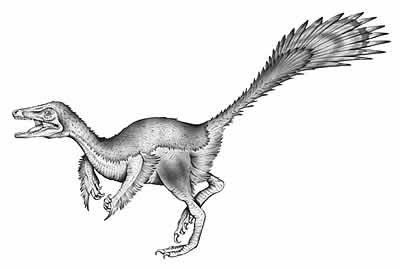
The "Archaeoraptor" scandal has ongoing ramifications. The scandal brought attention to illegal fossil deals conducted in China. It also highlighted the need for close scientific scrutiny of purported "missing links" published in journals which are not peer-reviewed."
SCANDAL
"Archaeoraptor" was unveiled at a press conference held by National Geographic magazine in October of 1999. At the same press conference also plans were announced to return the fossil to Chinese authorities, as it was illegally exported. In November of 1999 National Geographic featured the fossil in an article written by art editor Christopher Sloan. The article in general discussed feathered dinosaurs and the origin of birds. It claimed the fossil was "a missing link between terrestrial dinosaurs and birds that could actually fly" and informally reffered to it as "Archaeoraptor liaoningensis", announcing it would later be formally named as such."
------------------------------------------
National Geographic magazine
November 1999:
"Feathers for T. rex?
By Christopher P. Sloan
Photographs by O. Louis Mazzatenta"
http://www.nationalgeographic.com/ngm/9911/hilights.html
------------------------------------------
"Spectacular fossil finds from China and Mongolia provide important new links between birds and their dinosaur predecessors.
CHRONOLOGY
"According to National Geographic's report, the story of "Archaeoraptor" begins in July 1997 in Xiasanjiazi, China, where farmers routinely dug in the shale pits with picks and sold fossils to dealers for a few dollars. This was an illegal practice, but it was common then. In this case one farmer found a rare fossil of a toothed bird, complete with feather impressions. The fossil broke into pieces during collection. Nearby, in the same pit, he found pieces including a feathered tail and legs. He cemented several of these pieces together in a manner that he believed was correct. He apparently knew that it would make a more complete-looking and, thus, more expensive fossil. It was sold in June 1998 to an anonymous dealer and smuggled to the United States. According to authorities in Beijing, no fossils may leave China legally.
By the fall 1998 annual meeting of the Society of Vertebrate Paleontology, held in Utah, rumors were circulating about a striking fossil of a primitive bird that was in private hands. This fossil was presented by an anonymous dealer at a gem show in Tucson, Arizona. The Dinosaur Museum in Blanding, Utah, purchased it in February of 1999. The museum is run by Stephen A. Czerkas and his wife, Sylvia Czerkas. Mr. Czerkas does not hold a university degree, but he is a dinosaur enthusiast and artist. He arranged for patrons of his museum, including trustee Dale Slade, to provide $80,000 for the purchase of the fossil, in order to study it scientifically and prevent it from disappearing into an anonymous private collection.
The Czerkases contacted paleontologist Phil Currie, who contacted the National Geographic Society. Currie agreed to study the fossil on condition that it was eventually returned to China. The National Geographic Society intended to get the fossil formally published in the peer-reviewed science journal Nature, and then follow up immediately with a press conference and an issue of National Geographic. Editor Bill Allen asked that all members of the project keep the fossil secret, so that the magazine would have a scoop on the story.
Slade and the Czerkases intended the fossil to be the "crown jewel" of the Dinosaur Museum and planned to keep it on display there for five years. Sloan says that he flew to Utah in the spring of 1999 to convince Stephen Czerkas to return the fossil to China immediately after publication, or he would not write about it for National Geographic and Currie would not work on it. Czerkas then agreed. Currie then contacted the Institute of Vertebrate Paleontology and Paleoanthropology in Beijing, and National Geographic flew the IVPP's Xu Xing to Utah to be part of the "Archaeoraptor" team.
During the initial examination of the fossil on March 6, 1999 it had already become clear to Currie that the left and right feet mirrored each other perfectly and that the fossil had been completed by using both slab and counterslab. He also noticed no connection could be seen between the tail and the body. In July 1999, Currie and the Czerkases brought the fossil to the High-Resolution X-ray CT Facility of the University of Texas (Austin) founded and operated by Dr. Timothy Rowe to make CT scans. Rowe, having made the scans on July 29, determined that they indicated that the bottom fragments, showing the tail and the lower legs, were not part of the larger fossil. He informed the Czerkases on August 2 that there was a chance of the whole being a fraud. During a subsequent discussion Rowe and Currie were pressured by the Czerkases to keep their reservations private.
Currie in the first week of September sent his preparator, Kevin Aulenback, to the Dinosaur Museum in Blanding to prepare the fossil for better study. Aulenback concluded that the fossil was "a composite specimen of at least 3 specimens...with a maximum...of five...separate specimens", but the Czerkases angrily denied this and Aulenbeck only reported this to Currie.."
"National Geographic went ahead and published without peer review.. The fossil was unveiled in a press conference on October 15, 1999, and the November 1999 National Geographic Magazine contained an article by Christopher P. Sloan—a National Geographic art editor. Sloan described it as a missing link that helped elucidate the connection between dinosaurs and birds. The original fossil was put on display at the National Geographic Society in Washington, DC..."
"After the November National Geographic came out, Storrs L. Olson, curator of birds in the National Museum of Natural History of the Smithsonian Institution...[protested] the "prevailing dogma that birds evolved from dinosaurs"."
"In October, 1999, after having been informed by Currie of the problems and seeing the specimen for the first time, Xu noticed that the tail of "Archaeoraptor" strongly resembled an unnamed maniraptoran dinosaur that he was studying—later to be named Microraptor zhaoianus. He returned to China and traveled to Liaoning Province where he inspected the fossil site and contacted a number of fossil dealers. He eventually found a fairly complete fossil of a tiny dromaeosaur, and the tail of this new fossil corresponded so exactly to the tail on the "Archaeoraptor" fossil that it had to be the counterslab— it even had two matching yellow oxide stains. On December 20, 1999 Xu Xing sent e-mails to the authors and Sloan, announcing that the fossil was a fake."
ONGOING CONFUSION
"In 2002 the Czerkases published a volume through their Dinosaur Museum titled Feathered Dinosaurs and the Origin of Flight. In this journal they described and named several species. Of the six species named in the book, five are disputed.
Despite the work of Zhou et al. (2002), Czerkas and co-author Xu Xing described the upper portion of the "Archaeoraptor" fossil as a new bird genus, Archaeovolans, in the Dinosaur Museum Journal. "
"Another taxon that Czerkas assigned to the pterosauria and named Utahdactylus was reviewed by Dr. Chris Bennett. Bennett found multiple misidentifications of bones and inconsistencies between Czerkas' diagrams and the actual fossils. Bennett found the specimen to be an indeterminate diapsid and criticized the previous authors for publishing a species name when no diagnostic characters below the class level could be verified. He made Utahdactylus a nomen dubium."
TRAVELING EXHIBIT
"The "Archaeoraptor" scandal has ramifications that are ongoing. In 2001 Stephen and Sylvia Czerkas compiled a traveling exhibit containing 34 other Chinese fossils. The show is titled Feathered Dinosaurs and the Origin of Flight. The San Diego Natural History Museum paid a set fee to the Dinosaur Museum to display this show in 2004."
"Through March 2009, however, the show is scheduled for the Fresno Metropolitan Museum of Art and Science in California."
(from:
http://en.wikipedia.org/wiki/Archaeoraptor)
PILTDOWN MAN
"The "Piltdown Man" is a famous hoax consisting of fragments of a skull and jawbone collected in 1912 from a gravel pit at Piltdown, a village near Uckfield, East Sussex, in England. The fragments were thought by many experts of the day to be the fossilised remains of a hitherto unknown form of early human."
"The significance of the specimen remained the subject of controversy until it was exposed in 1953 as a forgery, consisting of the lower jawbone of an orangutan combined with the skull of a fully developed, modern man.
The Piltdown hoax is perhaps the most famous archaeological hoax in history. It has been prominent for two reasons: the attention paid to the issue of human evolution, and the length of time (more than 40 years) that elapsed from its discovery to its full exposure as a forgery."
"The fossil was sufficiently influential for Clarence Darrow to introduce it as evidence in defense of Scopes during the Scopes Monkey Trial. Darrow died in 1938, more than ten years before Piltdown Man was exposed as a fraud. Scientology founder L. Ron Hubbard met less fortunate timing, listing Piltdown Man as one of the ancestors of humanity in his book Scientology: A History of Man, and describing him as having "enormous" teeth and being "quite careless as to whom and what he bit." Piltdown Man would be exposed as a hoax just months after the publication of Hubbard's book."
(from:
http://en.wikipedia.org/wiki/Piltdown_Man)
JAVA MAN
"Java Man is the name given to fossils discovered in 1891 at Trinil on the banks of the Bengawan Solo River in East Java, Indonesia, one of the first known specimens of Homo erectus. Its discoverer, Eugène Dubois, gave it the scientific name Pithecanthropus erectus, a name derived from Greek and Latin roots meaning upright ape-man."
"Dubois' find was not a complete specimen, but consisted of a skullcap, a femur, and a few teeth. There is some dissent as to whether all these bones represent the same species."
(from:
http://en.wikipedia.org/wiki/Java_Man)
"NEBRASKA MAN: A single tooth, discovered in Nebraska in 1922 grew an entire evolutionary link between man and monkey, until another identical tooth was found which was protruding from the jawbone of a wild pig."
"ORCE MAN: Found in the southern Spanish town of Orce in 1982, and hailed as the oldest fossilized human remains ever found in Europe. One year later officials admitted the skull fragment was not human but probably came from a 4 month old donkey. Scientists had said the skull belonged to a 17 year old man who lived 900,000 to 1.6 million years ago, and even had very detail drawings done to represent what he would have looked like. (source: "Skull fragment may not be human", Knoxville News-Sentinel, 1983)
NEANDERTHAL: Still synonymous with brutishness, the first Neanderthal remains were found in France in 1908. Considered to be ignorant, ape-like, stooped and knuckle-dragging, much of the evidence now suggests that Neanderthal was just as human as us, and his stooped appearance was because of arthritis and rickets. Neanderthals are now recognized as skilled hunters, believers in an after-life, and even skilled surgeons, as seen in one skeleton whose withered right arm had been amputated above the elbow. (source: "Upgrading Neanderthal Man", Time Magazine, May 17, 1971, Vol. 97, No. 20)"
(from:
http://www.nwcreation.net/evolutionfraud.html)
THE PEPPERED MOTH: NATURAL SELECTION'S MOST FAMOUS EXAMPLE
"The "evolution" of the peppered moth, Biston betularia, whose story is recounted in almost every textbook on evolution, now appears to be based upon spurious data. According to the standard account, only one version of Biston existed before the mid-19th century: a white variety, peppered with black spots. During the Industrial Revolution its numbers plummeted because it became easy prey for birds as it rested on the pollution-blackened trunks of trees. In its place a mutant, pitch-black form of the peppered moth began to thrive, as it could rest on tree trunks without fear of being eaten. Precisely as predicted by Darwin's theory of natural selection, this more fit mutant moth rapidly outnumbered the white version, reaching 100 per cent levels in some industrial areas. However, during the 1950's, naturalists discovered a resurgence of the white variety, thought to be the result of the Clean Air Acts. Scientists soon discovered that the white variety flourished again well before the return of pollution-free trees, while the black type continued to thrive in areas unaffected by industry. In addition, experiments showed that neither variety of moth chooses resting places best suited to its camouflage. Despite 40 years of effort, scientists have seen only two moths ever resting on tree trunks - they never have landed consistently on tree trunks, but hide under branches! It looks like the evolution textbooks will have to be rewritten. Evolutionist Richard Dawkins dismissed the new data, saying that, "nothing momentous hangs on these experiments."
Matthews, R. 1999. Scientists pick holes in Darwin moth theory. Telegraph Group Limited March 14, 1999."
(from:
http://www.godandscience.org/evolution/news.html)
"Ramapithecus was widely recognized as a direct ancestor of humans. It is now established that he was merely an extinct type of orangutan."
"Australopithecus afarensis, or "Lucy," has been considered a missing link for years. However, studies of the inner ear, skulls and bones have shown that she was merely a pygmy chimpanzee that walked a bit more upright than some other apes. She was not on her way to becoming human.
Homo erectus has been found throughout the world. He is smaller than the average human of today, with a proportionately smaller head and brain cavity. However, the brain size is within the range of people today and studies of the middle ear have shown that he was just like current Homo sapiens. Remains are found throughout the world in the same proximity to remains of ordinary humans, suggesting coexistence. Australopithecus africanus and Peking man were presented as ape-men missing links for years, but are now both considered Homo erectus.
Homo habilis is now generally considered to be comprised of pieces of various other types of creatures, such as Australopithecus and Homo erectus, and is not generally viewed as a valid classification."
"In July 2002, anthropologists announced the discovery of a skull in Chad with "an unusual mixture of primitive and humanlike features." The find was dubbed "Toumai" (the name give to children in Chad born close to the dry season) and was immediately hailed as "the earliest member of the human family found so far." By October 2002, a number of scientists went on record to criticize the premature claim -- declaring that the discovery is merely the fossil of an ape."
(from:
http://www.allaboutcreation.org/human-evolution.htm)
"In any case, no real evolutionist, whether gradualist or punctuationist, uses the fossil record as evidence in favor of evolution as opposed to special creation." (Mark Ridley, in New Scientist, volume 90, “Who Doubts Evolution?”)
"While many inferences about evolution are derived from living organisms, we must look to the fossil record for the ultimate documentation of large-scale change. In the absence of a fossil record, the credibility of evolutionists would be severely weakened. We might wonder whether the doctrine of evolution would qualify as anything more than an outrageous hypothesis." (Steven Stanley, Macroevolution: Pattern and Process)
"I know that at least in paleoanthropology, data are still so sparse that theory heavily influences interpretations. Theories have, in the past, clearly reflected our current ideologies instead of the actual data." (David Pilbeam, in Human Nature, “Rearranging Our Family Tree”)
"Since 1859 one of the most vexing properties of the fossil record has been its obvious imperfection...The inability of the fossil record to produce the “missing links” has been taken as solid evidence for disbelieving the theory." (A.J. Boucot, Elsevier Scientific Publishing, Evolution and Extinction Rate Controls)
"Modern apes, for instance, seem to have sprung out of nowhere. They have no yesterday, no fossil record. And the true origin of modern humans--of upright, naked, tool-making, big-brained beings--is, if we are to be honest with ourselves, an equally mysterious matter." (Lyall Watson, in “The Water People”)
"I can understand the inherent difficulty in attempting to discover intermediate forms. My problem concerns the methodology of science: If an evolutionist accepts gaps as a prerequisite for his theory, is he not arguing from a lack of evidence? If a biologist teaches that between two existing fossils there was a non-existing third (and perhaps several others), is he not really like the man of religious faith who says: “I believe, even though there is not evidence?” (In Bioscience, volume 28, “Biologists, Help!”)
"It takes a great deal of reading to find out for any particular genus just how complete the various parts of the body are and how much in the illustrated figures is due to clever reconstruction. The early papers were always careful to indicate by dotted lines or lack of shading the precise limits of the reconstructions, but later authors are not so careful." (Implications of Evolution, Pergamon Press)
"Paleontologists have tried to turn Archaeopteryx into an earth-bound, feathered dinosaur. But it’s not. It is a bird, a perching bird. And no amount of ‘paleobabble’ is going to change that." (Alan Feduccia, ornithologist of the University of North Carolina at Chapel Hill, as cited in Science, Virginia Morell, Archaeopteryx: “Early Bird Catches a Can of Worms“)
"Archaeopteryx probably cannot tell us much about the early origins of feathers and flight in true protobirds, because Archaeopteryx was, in the modern sense, a bird." (Alan Feduccia, in Science, volume 259, “Evidence from Claw Geometry Indicating Arboreal Habits of Archaeopteryx”)
"National Geographic has reached an all-time low for engaging in sensationalistic, unsubstantiated, tabloid journalism...it eventually became clear to me that National Geographic was not interested in anything other than the prevailing dogma that birds evolved from dinosaurs...The idea of feathered dinosaurs and the theropod origin of birds is being actively promulgated by a cadre of zealous scientists acting in concert with certain editors of Nature and National Geographic who themselves have become outspoken and highly biased proselytizers of the faith. Truth and careful scientific weighing of evidence have been among the first casualties in their program, which is now fast becoming one of the grander scientific hoaxes of our age--the paleontological equivalent of cold fusion." (Written in a November 1, 1999 open letter by evolutionist Storrs Olson, Curator of Birds at the National Museum of Natural History of the Smithsonian Institution)
Israeli scientist Lee Spetner and British astronomer Fred Hoyle studied Archaeopteryx and set forth good evidence that the fossil was just another fraud. As stated by (G. Vines, in New Scientist, volume 105, “Strange Case of Archaeopteryx Fraud”):
"His [Spetner] suspicions were aroused when he read that the two specimens with the clearest feathers-the London and Berlin fossils-came from the collection of a Bavarian doctor, Dr. Karl Haberlein. Spetner and his colleagues argue that Haberlein gouged out an area around two genuine fossils of a dinosaur-like reptile, and made a matrix with cement which he applied to the fossils. Then, Spetner claims, he pressed chicken feathers or the like to the mixture to create the feather impressions.[Photos taken by Robert Watkins, of the physics department at Cardiff]...show signs of a forger’s work: a fine-grained substrate under the feathers, blobs that look like chewing gum that could be the remnants of the forgers cement...The fossil is split into two halves: an imprint of the creature is reflected in a ‘counter slab’ created when the rock containing the fossil was split open, like two halves of a mould. Hoyle and his colleagues find elevated or depressed regions on one slab that are not perfectly mirrored on the other. Finally, they point to ‘double-strike’ impressions of feathers. In a few places the same feather has apparently left two impressions slightly displaced to one side."
(For a much more in-depth treatment On The Alleged Dinosaurian Ancestry Of Birds, see: http://www.trueorigins.org/birdevo.htm )
Also see: Evolution of Whales: Pure Fantasy
"Archaeoraptor" is the generic name informally assigned in 1999 to a fossil from China in an article published in National Geographic magazine. The magazine claimed that the fossil was a "missing link" between birds and terrestrial theropod dinosaurs. Even prior to this publication there had been severe doubts about the fossil's authenticity. It led to a scandal when it was definitely proven to be a forgery through further scientific study. The forgery was constructed from rearranged pieces of real fossils from different species. Zhou et al. found that the head and upper body actually belong to a specimen of the primitive fossil bird Yanornis. A 2002 study found that the tail belongs to a small winged dromaeosaur, Microraptor, named in 2000. The legs and feet belong to an as yet unknown animal.
The "Archaeoraptor" scandal has ongoing ramifications. The scandal brought attention to illegal fossil deals conducted in China. It also highlighted the need for close scientific scrutiny of purported "missing links" published in journals which are not peer-reviewed."
SCANDAL
"Archaeoraptor" was unveiled at a press conference held by National Geographic magazine in October of 1999. At the same press conference also plans were announced to return the fossil to Chinese authorities, as it was illegally exported. In November of 1999 National Geographic featured the fossil in an article written by art editor Christopher Sloan. The article in general discussed feathered dinosaurs and the origin of birds. It claimed the fossil was "a missing link between terrestrial dinosaurs and birds that could actually fly" and informally reffered to it as "Archaeoraptor liaoningensis", announcing it would later be formally named as such."
------------------------------------------
National Geographic magazine
November 1999:
"Feathers for T. rex?
By Christopher P. Sloan
Photographs by O. Louis Mazzatenta"
http://www.nationalgeographic.com/ngm/9911/hilights.html
------------------------------------------
"Spectacular fossil finds from China and Mongolia provide important new links between birds and their dinosaur predecessors.
CHRONOLOGY
"According to National Geographic's report, the story of "Archaeoraptor" begins in July 1997 in Xiasanjiazi, China, where farmers routinely dug in the shale pits with picks and sold fossils to dealers for a few dollars. This was an illegal practice, but it was common then. In this case one farmer found a rare fossil of a toothed bird, complete with feather impressions. The fossil broke into pieces during collection. Nearby, in the same pit, he found pieces including a feathered tail and legs. He cemented several of these pieces together in a manner that he believed was correct. He apparently knew that it would make a more complete-looking and, thus, more expensive fossil. It was sold in June 1998 to an anonymous dealer and smuggled to the United States. According to authorities in Beijing, no fossils may leave China legally.
By the fall 1998 annual meeting of the Society of Vertebrate Paleontology, held in Utah, rumors were circulating about a striking fossil of a primitive bird that was in private hands. This fossil was presented by an anonymous dealer at a gem show in Tucson, Arizona. The Dinosaur Museum in Blanding, Utah, purchased it in February of 1999. The museum is run by Stephen A. Czerkas and his wife, Sylvia Czerkas. Mr. Czerkas does not hold a university degree, but he is a dinosaur enthusiast and artist. He arranged for patrons of his museum, including trustee Dale Slade, to provide $80,000 for the purchase of the fossil, in order to study it scientifically and prevent it from disappearing into an anonymous private collection.
The Czerkases contacted paleontologist Phil Currie, who contacted the National Geographic Society. Currie agreed to study the fossil on condition that it was eventually returned to China. The National Geographic Society intended to get the fossil formally published in the peer-reviewed science journal Nature, and then follow up immediately with a press conference and an issue of National Geographic. Editor Bill Allen asked that all members of the project keep the fossil secret, so that the magazine would have a scoop on the story.
Slade and the Czerkases intended the fossil to be the "crown jewel" of the Dinosaur Museum and planned to keep it on display there for five years. Sloan says that he flew to Utah in the spring of 1999 to convince Stephen Czerkas to return the fossil to China immediately after publication, or he would not write about it for National Geographic and Currie would not work on it. Czerkas then agreed. Currie then contacted the Institute of Vertebrate Paleontology and Paleoanthropology in Beijing, and National Geographic flew the IVPP's Xu Xing to Utah to be part of the "Archaeoraptor" team.
During the initial examination of the fossil on March 6, 1999 it had already become clear to Currie that the left and right feet mirrored each other perfectly and that the fossil had been completed by using both slab and counterslab. He also noticed no connection could be seen between the tail and the body. In July 1999, Currie and the Czerkases brought the fossil to the High-Resolution X-ray CT Facility of the University of Texas (Austin) founded and operated by Dr. Timothy Rowe to make CT scans. Rowe, having made the scans on July 29, determined that they indicated that the bottom fragments, showing the tail and the lower legs, were not part of the larger fossil. He informed the Czerkases on August 2 that there was a chance of the whole being a fraud. During a subsequent discussion Rowe and Currie were pressured by the Czerkases to keep their reservations private.
Currie in the first week of September sent his preparator, Kevin Aulenback, to the Dinosaur Museum in Blanding to prepare the fossil for better study. Aulenback concluded that the fossil was "a composite specimen of at least 3 specimens...with a maximum...of five...separate specimens", but the Czerkases angrily denied this and Aulenbeck only reported this to Currie.."
"National Geographic went ahead and published without peer review.. The fossil was unveiled in a press conference on October 15, 1999, and the November 1999 National Geographic Magazine contained an article by Christopher P. Sloan—a National Geographic art editor. Sloan described it as a missing link that helped elucidate the connection between dinosaurs and birds. The original fossil was put on display at the National Geographic Society in Washington, DC..."
"After the November National Geographic came out, Storrs L. Olson, curator of birds in the National Museum of Natural History of the Smithsonian Institution...[protested] the "prevailing dogma that birds evolved from dinosaurs"."
"In October, 1999, after having been informed by Currie of the problems and seeing the specimen for the first time, Xu noticed that the tail of "Archaeoraptor" strongly resembled an unnamed maniraptoran dinosaur that he was studying—later to be named Microraptor zhaoianus. He returned to China and traveled to Liaoning Province where he inspected the fossil site and contacted a number of fossil dealers. He eventually found a fairly complete fossil of a tiny dromaeosaur, and the tail of this new fossil corresponded so exactly to the tail on the "Archaeoraptor" fossil that it had to be the counterslab— it even had two matching yellow oxide stains. On December 20, 1999 Xu Xing sent e-mails to the authors and Sloan, announcing that the fossil was a fake."
ONGOING CONFUSION
"In 2002 the Czerkases published a volume through their Dinosaur Museum titled Feathered Dinosaurs and the Origin of Flight. In this journal they described and named several species. Of the six species named in the book, five are disputed.
Despite the work of Zhou et al. (2002), Czerkas and co-author Xu Xing described the upper portion of the "Archaeoraptor" fossil as a new bird genus, Archaeovolans, in the Dinosaur Museum Journal. "
"Another taxon that Czerkas assigned to the pterosauria and named Utahdactylus was reviewed by Dr. Chris Bennett. Bennett found multiple misidentifications of bones and inconsistencies between Czerkas' diagrams and the actual fossils. Bennett found the specimen to be an indeterminate diapsid and criticized the previous authors for publishing a species name when no diagnostic characters below the class level could be verified. He made Utahdactylus a nomen dubium."
TRAVELING EXHIBIT
"The "Archaeoraptor" scandal has ramifications that are ongoing. In 2001 Stephen and Sylvia Czerkas compiled a traveling exhibit containing 34 other Chinese fossils. The show is titled Feathered Dinosaurs and the Origin of Flight. The San Diego Natural History Museum paid a set fee to the Dinosaur Museum to display this show in 2004."
"Through March 2009, however, the show is scheduled for the Fresno Metropolitan Museum of Art and Science in California."
(from:
http://en.wikipedia.org/wiki/Archaeoraptor)
PILTDOWN MAN
"The "Piltdown Man" is a famous hoax consisting of fragments of a skull and jawbone collected in 1912 from a gravel pit at Piltdown, a village near Uckfield, East Sussex, in England. The fragments were thought by many experts of the day to be the fossilised remains of a hitherto unknown form of early human."
"The significance of the specimen remained the subject of controversy until it was exposed in 1953 as a forgery, consisting of the lower jawbone of an orangutan combined with the skull of a fully developed, modern man.
The Piltdown hoax is perhaps the most famous archaeological hoax in history. It has been prominent for two reasons: the attention paid to the issue of human evolution, and the length of time (more than 40 years) that elapsed from its discovery to its full exposure as a forgery."
"The fossil was sufficiently influential for Clarence Darrow to introduce it as evidence in defense of Scopes during the Scopes Monkey Trial. Darrow died in 1938, more than ten years before Piltdown Man was exposed as a fraud. Scientology founder L. Ron Hubbard met less fortunate timing, listing Piltdown Man as one of the ancestors of humanity in his book Scientology: A History of Man, and describing him as having "enormous" teeth and being "quite careless as to whom and what he bit." Piltdown Man would be exposed as a hoax just months after the publication of Hubbard's book."
(from:
http://en.wikipedia.org/wiki/Piltdown_Man)
JAVA MAN
"Java Man is the name given to fossils discovered in 1891 at Trinil on the banks of the Bengawan Solo River in East Java, Indonesia, one of the first known specimens of Homo erectus. Its discoverer, Eugène Dubois, gave it the scientific name Pithecanthropus erectus, a name derived from Greek and Latin roots meaning upright ape-man."
"Dubois' find was not a complete specimen, but consisted of a skullcap, a femur, and a few teeth. There is some dissent as to whether all these bones represent the same species."
(from:
http://en.wikipedia.org/wiki/Java_Man)
"NEBRASKA MAN: A single tooth, discovered in Nebraska in 1922 grew an entire evolutionary link between man and monkey, until another identical tooth was found which was protruding from the jawbone of a wild pig."
"ORCE MAN: Found in the southern Spanish town of Orce in 1982, and hailed as the oldest fossilized human remains ever found in Europe. One year later officials admitted the skull fragment was not human but probably came from a 4 month old donkey. Scientists had said the skull belonged to a 17 year old man who lived 900,000 to 1.6 million years ago, and even had very detail drawings done to represent what he would have looked like. (source: "Skull fragment may not be human", Knoxville News-Sentinel, 1983)
NEANDERTHAL: Still synonymous with brutishness, the first Neanderthal remains were found in France in 1908. Considered to be ignorant, ape-like, stooped and knuckle-dragging, much of the evidence now suggests that Neanderthal was just as human as us, and his stooped appearance was because of arthritis and rickets. Neanderthals are now recognized as skilled hunters, believers in an after-life, and even skilled surgeons, as seen in one skeleton whose withered right arm had been amputated above the elbow. (source: "Upgrading Neanderthal Man", Time Magazine, May 17, 1971, Vol. 97, No. 20)"
(from:
http://www.nwcreation.net/evolutionfraud.html)
THE PEPPERED MOTH: NATURAL SELECTION'S MOST FAMOUS EXAMPLE
"The "evolution" of the peppered moth, Biston betularia, whose story is recounted in almost every textbook on evolution, now appears to be based upon spurious data. According to the standard account, only one version of Biston existed before the mid-19th century: a white variety, peppered with black spots. During the Industrial Revolution its numbers plummeted because it became easy prey for birds as it rested on the pollution-blackened trunks of trees. In its place a mutant, pitch-black form of the peppered moth began to thrive, as it could rest on tree trunks without fear of being eaten. Precisely as predicted by Darwin's theory of natural selection, this more fit mutant moth rapidly outnumbered the white version, reaching 100 per cent levels in some industrial areas. However, during the 1950's, naturalists discovered a resurgence of the white variety, thought to be the result of the Clean Air Acts. Scientists soon discovered that the white variety flourished again well before the return of pollution-free trees, while the black type continued to thrive in areas unaffected by industry. In addition, experiments showed that neither variety of moth chooses resting places best suited to its camouflage. Despite 40 years of effort, scientists have seen only two moths ever resting on tree trunks - they never have landed consistently on tree trunks, but hide under branches! It looks like the evolution textbooks will have to be rewritten. Evolutionist Richard Dawkins dismissed the new data, saying that, "nothing momentous hangs on these experiments."
Matthews, R. 1999. Scientists pick holes in Darwin moth theory. Telegraph Group Limited March 14, 1999."
(from:
http://www.godandscience.org/evolution/news.html)
"Ramapithecus was widely recognized as a direct ancestor of humans. It is now established that he was merely an extinct type of orangutan."
"Australopithecus afarensis, or "Lucy," has been considered a missing link for years. However, studies of the inner ear, skulls and bones have shown that she was merely a pygmy chimpanzee that walked a bit more upright than some other apes. She was not on her way to becoming human.
Homo erectus has been found throughout the world. He is smaller than the average human of today, with a proportionately smaller head and brain cavity. However, the brain size is within the range of people today and studies of the middle ear have shown that he was just like current Homo sapiens. Remains are found throughout the world in the same proximity to remains of ordinary humans, suggesting coexistence. Australopithecus africanus and Peking man were presented as ape-men missing links for years, but are now both considered Homo erectus.
Homo habilis is now generally considered to be comprised of pieces of various other types of creatures, such as Australopithecus and Homo erectus, and is not generally viewed as a valid classification."
"In July 2002, anthropologists announced the discovery of a skull in Chad with "an unusual mixture of primitive and humanlike features." The find was dubbed "Toumai" (the name give to children in Chad born close to the dry season) and was immediately hailed as "the earliest member of the human family found so far." By October 2002, a number of scientists went on record to criticize the premature claim -- declaring that the discovery is merely the fossil of an ape."
(from:
http://www.allaboutcreation.org/human-evolution.htm)
"In any case, no real evolutionist, whether gradualist or punctuationist, uses the fossil record as evidence in favor of evolution as opposed to special creation." (Mark Ridley, in New Scientist, volume 90, “Who Doubts Evolution?”)
"While many inferences about evolution are derived from living organisms, we must look to the fossil record for the ultimate documentation of large-scale change. In the absence of a fossil record, the credibility of evolutionists would be severely weakened. We might wonder whether the doctrine of evolution would qualify as anything more than an outrageous hypothesis." (Steven Stanley, Macroevolution: Pattern and Process)
"I know that at least in paleoanthropology, data are still so sparse that theory heavily influences interpretations. Theories have, in the past, clearly reflected our current ideologies instead of the actual data." (David Pilbeam, in Human Nature, “Rearranging Our Family Tree”)
"Since 1859 one of the most vexing properties of the fossil record has been its obvious imperfection...The inability of the fossil record to produce the “missing links” has been taken as solid evidence for disbelieving the theory." (A.J. Boucot, Elsevier Scientific Publishing, Evolution and Extinction Rate Controls)
"Modern apes, for instance, seem to have sprung out of nowhere. They have no yesterday, no fossil record. And the true origin of modern humans--of upright, naked, tool-making, big-brained beings--is, if we are to be honest with ourselves, an equally mysterious matter." (Lyall Watson, in “The Water People”)
"I can understand the inherent difficulty in attempting to discover intermediate forms. My problem concerns the methodology of science: If an evolutionist accepts gaps as a prerequisite for his theory, is he not arguing from a lack of evidence? If a biologist teaches that between two existing fossils there was a non-existing third (and perhaps several others), is he not really like the man of religious faith who says: “I believe, even though there is not evidence?” (In Bioscience, volume 28, “Biologists, Help!”)
"It takes a great deal of reading to find out for any particular genus just how complete the various parts of the body are and how much in the illustrated figures is due to clever reconstruction. The early papers were always careful to indicate by dotted lines or lack of shading the precise limits of the reconstructions, but later authors are not so careful." (Implications of Evolution, Pergamon Press)
"Paleontologists have tried to turn Archaeopteryx into an earth-bound, feathered dinosaur. But it’s not. It is a bird, a perching bird. And no amount of ‘paleobabble’ is going to change that." (Alan Feduccia, ornithologist of the University of North Carolina at Chapel Hill, as cited in Science, Virginia Morell, Archaeopteryx: “Early Bird Catches a Can of Worms“)
"Archaeopteryx probably cannot tell us much about the early origins of feathers and flight in true protobirds, because Archaeopteryx was, in the modern sense, a bird." (Alan Feduccia, in Science, volume 259, “Evidence from Claw Geometry Indicating Arboreal Habits of Archaeopteryx”)
"National Geographic has reached an all-time low for engaging in sensationalistic, unsubstantiated, tabloid journalism...it eventually became clear to me that National Geographic was not interested in anything other than the prevailing dogma that birds evolved from dinosaurs...The idea of feathered dinosaurs and the theropod origin of birds is being actively promulgated by a cadre of zealous scientists acting in concert with certain editors of Nature and National Geographic who themselves have become outspoken and highly biased proselytizers of the faith. Truth and careful scientific weighing of evidence have been among the first casualties in their program, which is now fast becoming one of the grander scientific hoaxes of our age--the paleontological equivalent of cold fusion." (Written in a November 1, 1999 open letter by evolutionist Storrs Olson, Curator of Birds at the National Museum of Natural History of the Smithsonian Institution)
Israeli scientist Lee Spetner and British astronomer Fred Hoyle studied Archaeopteryx and set forth good evidence that the fossil was just another fraud. As stated by (G. Vines, in New Scientist, volume 105, “Strange Case of Archaeopteryx Fraud”):
"His [Spetner] suspicions were aroused when he read that the two specimens with the clearest feathers-the London and Berlin fossils-came from the collection of a Bavarian doctor, Dr. Karl Haberlein. Spetner and his colleagues argue that Haberlein gouged out an area around two genuine fossils of a dinosaur-like reptile, and made a matrix with cement which he applied to the fossils. Then, Spetner claims, he pressed chicken feathers or the like to the mixture to create the feather impressions.[Photos taken by Robert Watkins, of the physics department at Cardiff]...show signs of a forger’s work: a fine-grained substrate under the feathers, blobs that look like chewing gum that could be the remnants of the forgers cement...The fossil is split into two halves: an imprint of the creature is reflected in a ‘counter slab’ created when the rock containing the fossil was split open, like two halves of a mould. Hoyle and his colleagues find elevated or depressed regions on one slab that are not perfectly mirrored on the other. Finally, they point to ‘double-strike’ impressions of feathers. In a few places the same feather has apparently left two impressions slightly displaced to one side."
(For a much more in-depth treatment On The Alleged Dinosaurian Ancestry Of Birds, see: http://www.trueorigins.org/birdevo.htm )
Also see: Evolution of Whales: Pure Fantasy
Tuesday, July 1, 2008
The "P" Word
OK, time for some visual political satire.
I created the following images in Adobe Photoshop CS2
(Click on each image to make it larger):
Political Playing Cards

Reptile Obama

I received the following in an email:
Obama's 143 Days of Senate Experience
Posted by Cheri Jacobus
Just how much Senate experience does Barack Obama have in terms of actual work days? Not much.
From the time Barack Obama was sworn in as a United State Senator, to the time he announced he was forming a Presidential exploratory committee, he logged 143 days of experience in the Senate. That's how many days the Senate was actually in session and working.
After 143 days of work experience, Obama believed he was ready to be Commander In Chief, Leader of the Free World, and fill the shoes of Abraham Lincoln, FDR, JFK and Ronald Reagan.
143 days -- I keep leftovers in my refrigerator longer than that.
In contrast, John McCain's 26 years in Congress, 22 years of military service including 1,966 days in captivity as a POW in Hanoi now seem more impressive than ever. At 71, John McCain may just be hitting his stride.
Think about it!
Someone emailed me the following cartoon:

Cartoon by Michael Ramirez, cartoonist at Investors' Business Daily.
© Copyright 2008 Investor's Business Daily. All Rights Reserved.
I was also sent the following by email:
Obama's Corn Fake
By INVESTOR'S BUSINESS DAILY
June 25, 2008 4:20 PM PT
If Obama wants energy independence through alternative fuels, why doesn't he back imported sugar-based ethanol? This old-style politician knows it isn't grown in the Midwest and Brazil has no electoral votes.
Barack Obama says he represents change. He also criticizes John McCain for trying to drill our way to energy independence to add to the profits of Big Oil. But it's Obama who's playing politics by trying to plant our way to energy independence, buying votes with alternative fuel subsidies that benefit ethanol producers such as Archer Daniels Midland.
ADM is based in Illinois, the second-largest corn-producing state. Not long after arriving in the U.S. Senate, Obama flew twice on corporate jets owned by the nation's largest ethanol producer. Imagine if McCain flew on the corporate jets of Exxon Mobil.
Corn-based ethanol gets a 51-cents-a-gallon tax subsidy that will cost taxpayers $4.5 billion this year. McCain opposes ethanol subsidies while Obama supports them. McCain opposed them even though Iowa is the first caucus state. Obama, touted by Caroline Kennedy as another JFK, was no profile in courage in Iowa.
That subsidy was cut to 45 cents a gallon in the new farm bill, but more money was pushed toward other biofuels such as switch grass. The Democrats can't wait for offshore oil or ANWR, but they can wait for switch grass. The tariff on imported ethanol was extended. Neither candidate voted on the bill, but Obama said he supported it. McCain said as president he would have vetoed it.
If Obama is sincere about alternative fuels, why does he oppose imported sugar-based ethanol from countries like Brazil? He supports not only the domestic subsidy, but a 54-cents-a-gallon tariff on imported ethanol. McCain opposes both.
Corn ethanol is less energy-efficient and costs more. It generates less than two units of energy for every unit of energy used to produce it. Ethanol made from sugar cane has an energy ratio of more than 8-to-1. Production costs and land prices are cheaper in the countries that produce it.
This year, according to John Lott Jr., senior research scientist at the University of Maryland, 34% of U.S. corn — some 3.65 billion bushels — will be used for fuel. Putting this much food into our gas tanks hasn't reduced gas prices, but it has raised food prices.
Farmers in vote-rich farm states plant corn for fuel, not only raising the price of corn, but also milk, eggs, meat and even bread as wheat fields are converted to corn.
Last year, as President Bush was about to sign an energy cooperation agreement with Brazil, Obama said the move would hurt "our country's drive toward energy independence."
Really? The only thing it might hurt is Obama's drive to the White House.
I created the following images in Adobe Photoshop CS2
(Click on each image to make it larger):
Political Playing Cards

Reptile Obama

I received the following in an email:
Obama's 143 Days of Senate Experience
Posted by Cheri Jacobus
Just how much Senate experience does Barack Obama have in terms of actual work days? Not much.
From the time Barack Obama was sworn in as a United State Senator, to the time he announced he was forming a Presidential exploratory committee, he logged 143 days of experience in the Senate. That's how many days the Senate was actually in session and working.
After 143 days of work experience, Obama believed he was ready to be Commander In Chief, Leader of the Free World, and fill the shoes of Abraham Lincoln, FDR, JFK and Ronald Reagan.
143 days -- I keep leftovers in my refrigerator longer than that.
In contrast, John McCain's 26 years in Congress, 22 years of military service including 1,966 days in captivity as a POW in Hanoi now seem more impressive than ever. At 71, John McCain may just be hitting his stride.
Think about it!
Someone emailed me the following cartoon:

Cartoon by Michael Ramirez, cartoonist at Investors' Business Daily.
© Copyright 2008 Investor's Business Daily. All Rights Reserved.
I was also sent the following by email:
Obama's Corn Fake
By INVESTOR'S BUSINESS DAILY
June 25, 2008 4:20 PM PT
If Obama wants energy independence through alternative fuels, why doesn't he back imported sugar-based ethanol? This old-style politician knows it isn't grown in the Midwest and Brazil has no electoral votes.
Barack Obama says he represents change. He also criticizes John McCain for trying to drill our way to energy independence to add to the profits of Big Oil. But it's Obama who's playing politics by trying to plant our way to energy independence, buying votes with alternative fuel subsidies that benefit ethanol producers such as Archer Daniels Midland.
ADM is based in Illinois, the second-largest corn-producing state. Not long after arriving in the U.S. Senate, Obama flew twice on corporate jets owned by the nation's largest ethanol producer. Imagine if McCain flew on the corporate jets of Exxon Mobil.
Corn-based ethanol gets a 51-cents-a-gallon tax subsidy that will cost taxpayers $4.5 billion this year. McCain opposes ethanol subsidies while Obama supports them. McCain opposed them even though Iowa is the first caucus state. Obama, touted by Caroline Kennedy as another JFK, was no profile in courage in Iowa.
That subsidy was cut to 45 cents a gallon in the new farm bill, but more money was pushed toward other biofuels such as switch grass. The Democrats can't wait for offshore oil or ANWR, but they can wait for switch grass. The tariff on imported ethanol was extended. Neither candidate voted on the bill, but Obama said he supported it. McCain said as president he would have vetoed it.
If Obama is sincere about alternative fuels, why does he oppose imported sugar-based ethanol from countries like Brazil? He supports not only the domestic subsidy, but a 54-cents-a-gallon tariff on imported ethanol. McCain opposes both.
Corn ethanol is less energy-efficient and costs more. It generates less than two units of energy for every unit of energy used to produce it. Ethanol made from sugar cane has an energy ratio of more than 8-to-1. Production costs and land prices are cheaper in the countries that produce it.
This year, according to John Lott Jr., senior research scientist at the University of Maryland, 34% of U.S. corn — some 3.65 billion bushels — will be used for fuel. Putting this much food into our gas tanks hasn't reduced gas prices, but it has raised food prices.
Farmers in vote-rich farm states plant corn for fuel, not only raising the price of corn, but also milk, eggs, meat and even bread as wheat fields are converted to corn.
Last year, as President Bush was about to sign an energy cooperation agreement with Brazil, Obama said the move would hurt "our country's drive toward energy independence."
Really? The only thing it might hurt is Obama's drive to the White House.
Subscribe to:
Posts (Atom)


 Posts
Posts


